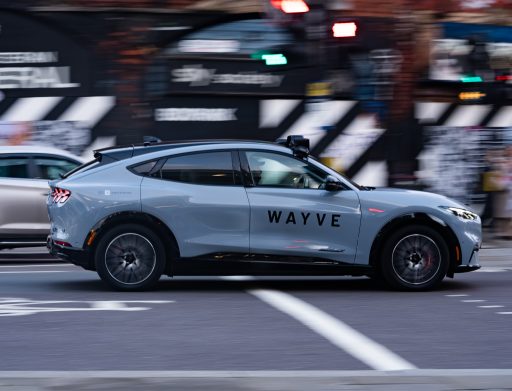
AI-first autonomous driving firm Wayve provides liquidity for early investors & employees with an $85M tender offer, affirming its robust $8.5B market value.
Wayve, the London-based pioneer in AI-first autonomous driving technology, has launched an $85 million employee tender offer, allowing early investors and current and former employees to sell shares at a robust valuation of $8.5 billion. This transaction provides a significant liquidity event for those who have contributed to the company’s journey, simultaneously firming up its market valuation in a sector known for its intense capital demands and long development cycles. The move signals strong investor confidence in Wayve’s differentiated end-to-end AI approach, setting it apart in a competitive landscape grappling with the complexities of scaling autonomous solutions. The tender offer, a secondary transaction, allows for the realization of equity value for a select group of stakeholders without the company raising new primary capital. It follows Wayve’s substantial $1.05 billion Series C funding round announced earlier this year, led by SoftBank Group and including investments from Nvidia and Microsoft. While the Series C was about fueling product development and commercialization, this tender offer addresses a common challenge in high-growth, pre-profitability tech companies: providing a mechanism for early employees and seed investors to gain some return on their long-term commitments. The $8.5 billion valuation implied by this secondary sale underscores a significant appreciation from its previous rounds, reflecting a bullish outlook on its technological progress and market potential. The autonomous vehicle industry has seen a recalibration of valuations in recent years, with many companies facing investor skepticism over lengthy commercialization timelines and high operational burn rates. Against this backdrop, Wayve’s ability to solidify an $8.5 billion valuation through a tender offer speaks volumes about its perceived technological lead and strategic positioning. The company’s focus on deep learning models that learn directly from real-world data, rather than relying on extensive hand-coded rules or highly detailed maps, is increasingly seen as a potentially more scalable and robust pathway to full autonomy.
What It Means
For Wayve, this tender offer is a multifaceted strategic play. Firstly, it serves as a powerful retention and attraction tool in the cutthroat talent market for AI and robotics engineers. Offering a tangible path to liquidity can significantly boost morale and loyalty, especially when the journey to an IPO or acquisition could still be years away. Secondly, it sends a clear signal to the market about the sustained belief of its core investor base in its long-term prospects, effectively validating the Series C valuation in a secondary market context. My read is that this isn't just about employee retention; it's a strategic move to manage expectations and demonstrate financial health in a sector often criticized for its capital intensity without clear paths to monetization. From a broader market perspective, the $8.5 billion valuation for an AI-first autonomous driving company like Wayve reinforces the prevailing trend favoring software-centric, data-driven approaches in complex AI domains. Traditional autonomous vehicle development often involved extensive modular systems, with separate components for perception, prediction, and planning. Wayve's end-to-end learning model seeks to simplify this by training a single neural network to go directly from raw sensor data to driving commands. I think this matters because it represents a potential paradigm shift, aligning with the broader advancements we're seeing in large language models and other foundational AI, where holistic deep learning systems are demonstrating superior generalization capabilities. This high valuation could encourage further investment into similar AI-centric methodologies across the mobility sector, potentially accelerating the transition away from more brittle, rule-based systems.
Wayve's latest employee tender offer values the company at $8.5 billion, cementing its status as a top-tier contender in the autonomous vehicle sector and signaling significant confidence from its investor base in its AI-driven strategy.
The Context
Founded in 2017 by Amar Shah and Alex Kendall, Wayve emerged from Cambridge University with a vision to develop self-driving technology rooted entirely in artificial intelligence. Its early focus was on imitation learning and reinforcement learning techniques, aiming to create a generalizable AI driver that could learn to navigate diverse and complex urban environments. This approach contrasts sharply with some established players who have invested heavily in high-definition mapping and complex rule-based systems, which can be expensive to scale and challenging to adapt to new geographies or unexpected scenarios. Its early backing from leading technology investors like Khosla Ventures, Eclipse Ventures, and Balderton Capital paved the way for its significant Series B and C rounds, underscoring a consistent belief in its foundational technology. Wayve’s distinct technological advantage lies in its "AI Driver" platform, which uses a single deep neural network trained on vast amounts of real-world driving data. This data-driven strategy allows the system to learn directly from human driving behavior, perceive its surroundings, predict future actions, and plan a safe trajectory in real-time. The promise here is a system that can continuously improve and adapt as it encounters more data, potentially leading to faster deployment and greater operational flexibility compared to systems requiring extensive manual engineering for every new operational design domain. Its partnerships, particularly with commercial fleet operators, are critical for securing the diverse and extensive datasets required to train such sophisticated AI models.
The Challenges Ahead
Despite the substantial valuation and technological promise, Wayve, like all autonomous vehicle companies, faces immense hurdles on the path to widespread commercialization. The technical challenge of achieving Level 4 or Level 5 autonomy in all weather conditions and diverse urban settings remains formidable. Safety, regulatory approval across fragmented global jurisdictions, and public acceptance are critical factors that dictate the pace of deployment. The capital intensity of scaling an autonomous fleet, coupled with the need for continuous research and development, means that even well-funded companies require sustained investment and a clear path to profitability, which for many in the sector, still lies several years in the future. The competitive landscape is also relentless, with well-capitalized players like Waymo and Cruise continuing to expand their services, albeit with their own set of challenges. Wayve's ability to demonstrate a clear competitive edge in terms of scalability, cost-effectiveness, and real-world safety performance will be paramount. The long-term success will hinge not just on the elegance of its AI models, but on its ability to integrate seamlessly with existing automotive ecosystems and prove its technology's robustness in diverse operational environments. Looking ahead, the market will closely watch for Wayve's progress in expanding its commercial partnerships and demonstrating further operational milestones. Key indicators will include the acceleration of its data collection efforts, the expansion of its test fleets into new cities or countries, and any clear signals regarding its path to revenue generation through strategic deployments. The ongoing evolution of global autonomous vehicle regulations will also significantly influence its trajectory.
Frequently asked questions
What is Wayve's recent tender offer?
Wayve launched an $85 million employee tender offer, allowing early investors and current/former employees to sell their shares. This transaction also solidifies the company's market valuation at $8.5 billion.
What is the valuation of Wayve?
Wayve is currently valued at $8.5 billion, as affirmed by its recent $85 million employee tender offer.
What kind of company is Wayve?
Wayve is a London-based company specializing in AI-first autonomous driving technology, pioneering advancements in self-driving vehicles.
Who can sell shares in Wayve's tender offer?
The tender offer is open to early investors and both current and former employees of Wayve, providing them with a liquidity event.
Why did Wayve launch a tender offer?
Wayve launched the tender offer to provide a significant liquidity event for those who contributed to its growth and to firm up its market valuation.
Where is Wayve based?
Wayve is based in London, serving as a pioneer in AI-first autonomous driving technology.