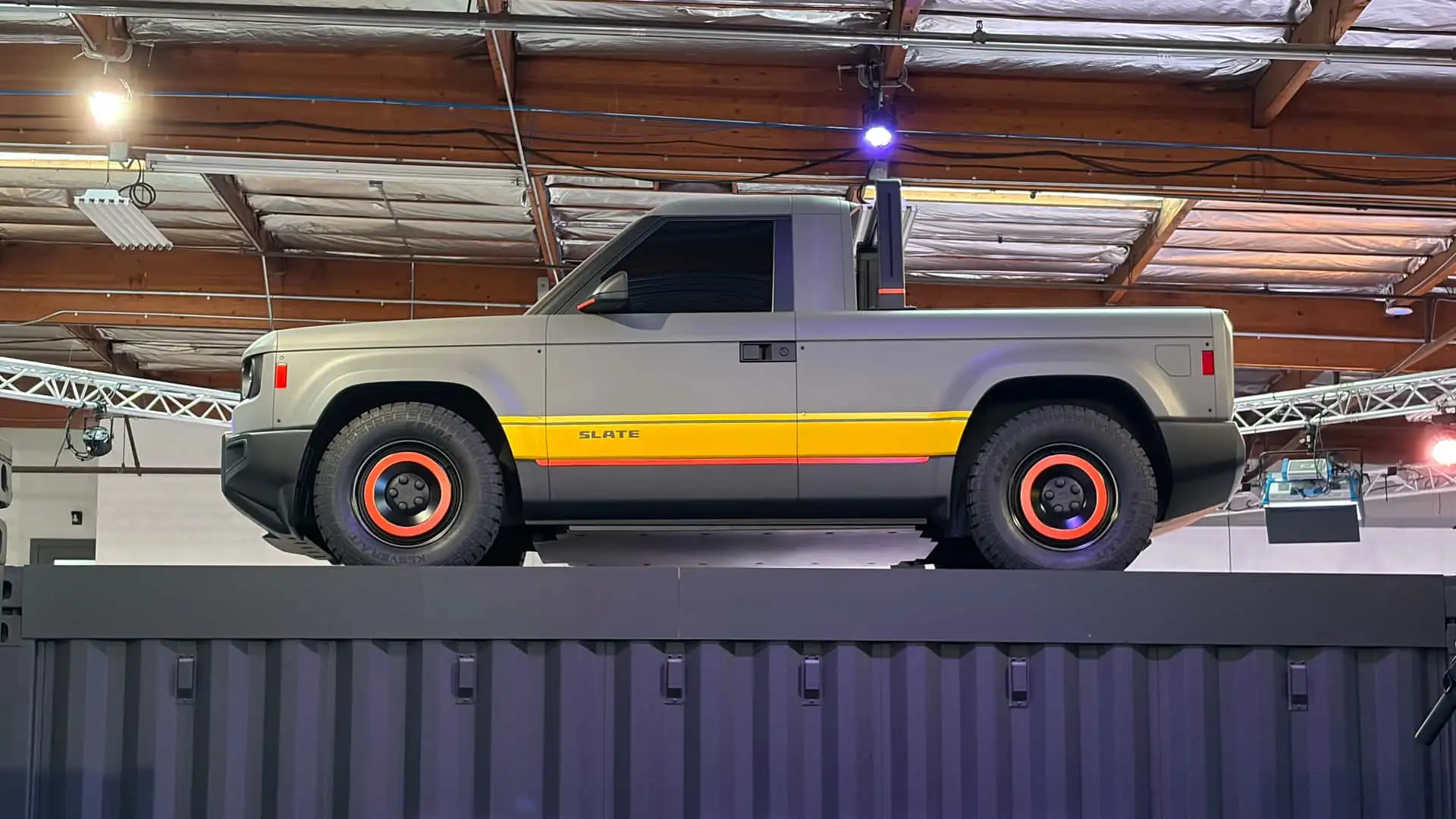
Slate Truck adopts LFP batteries, signaling a global EV market shift towards cost efficiency and supply chain resilience.
The Slate Truck project is shifting its battery strategy, committing to Lithium Iron Phosphate (LFP) cells for its upcoming electric heavy-duty vehicles, a move that signals a profound rebalancing of priorities within the global electric vehicle market. This pivot underscores a broader industry trend favoring supply chain resilience and cost efficiency over maximal energy density, poised to reshape capital allocation and product roadmaps across the automotive sector.
This decision by the as-yet-unreleased Slate Truck program reflects a maturation in LFP technology and a strategic imperative to control production costs amid volatile raw material markets. While Nickel Manganese Cobalt (NMC) or Nickel Cobalt Aluminum (NCA) chemistries have traditionally been preferred for their higher energy density, offering extended range for passenger vehicles, LFP’s inherent advantages in safety, cycle life, and cost per kilowatt-hour are proving compelling for commercial applications where durability and total cost of ownership (TCO) are paramount.
The technical specifics of LFP, utilizing iron and phosphate instead of nickel and cobalt, translate directly into reduced material costs and a less complex supply chain. These materials are more abundant and ethically less fraught, mitigating geopolitical risks and price fluctuations that have plagued nickel and cobalt markets. For a truck designed for demanding duty cycles and high mileage, LFP's robust thermal stability and longer calendar life contribute significantly to operational uptime and long-term economic viability.
What It Means
The adoption of LFP by a prominent new entrant like Slate Truck sends a clear message about the evolving landscape of electric commercial vehicles. It suggests that for fleet operators, the marginal gain in range offered by nickel-based chemistries is increasingly outweighed by the substantial benefits of LFP in terms of acquisition cost, insurance premiums due to enhanced safety, and predictable long-term performance. This strategic choice allows Slate to offer a more competitively priced vehicle, directly impacting market penetration and accelerating the electrification of logistics and industrial sectors.
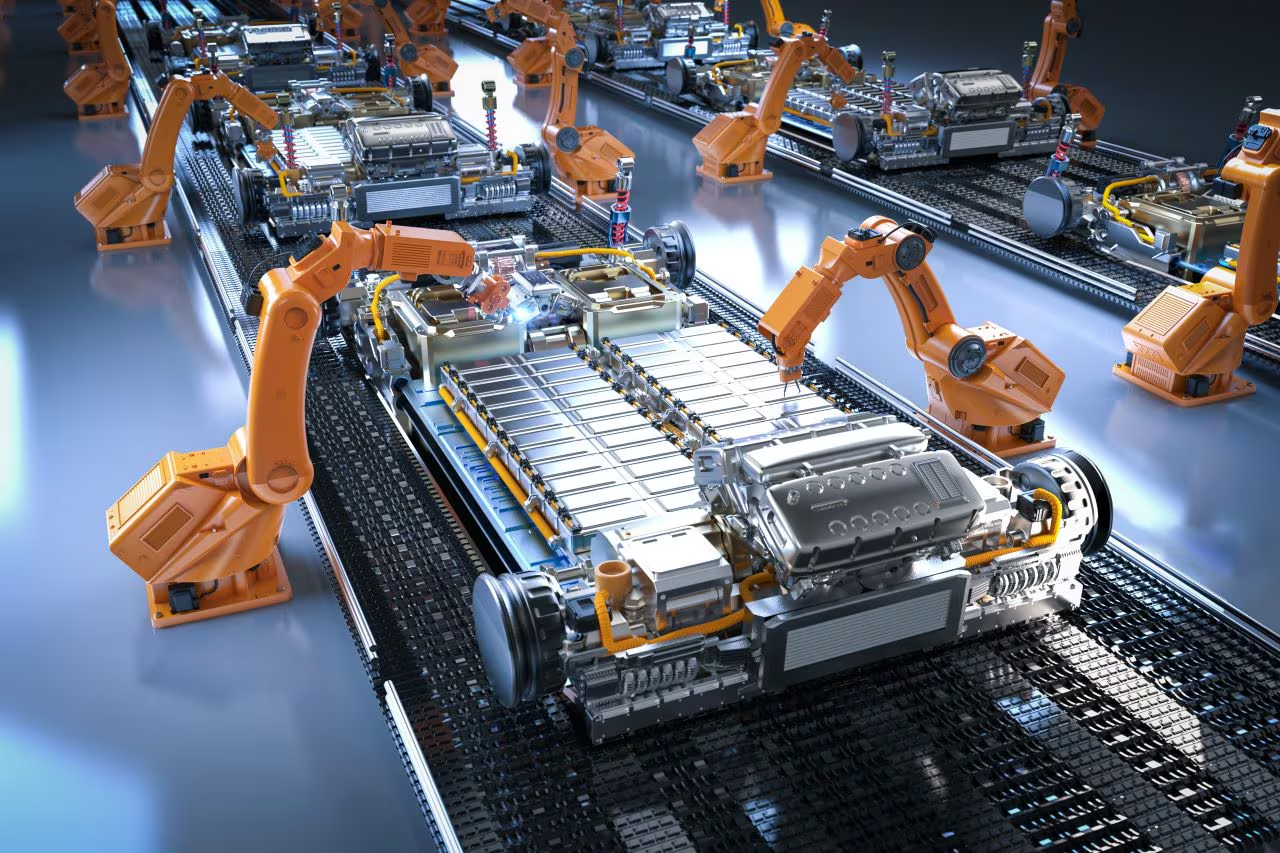
From a manufacturing standpoint, this shift simplifies battery pack design and assembly. LFP cells are less prone to thermal runaway, allowing for potentially less complex and lighter thermal management systems, which in turn reduces overall vehicle weight and manufacturing complexity. This trickle-down effect can lead to efficiencies throughout the production process, from gigafactory design to vehicle final assembly, ultimately compressing lead times and increasing profit margins in a highly competitive market.
The move also positions Slate for greater control over its battery supply. With LFP production largely concentrated in Asian markets, particularly China, establishing strong partnerships or even vertical integration in this segment could offer a distinct competitive advantage. It’s a pragmatic response to the realities of global battery supply, de-risking the critical component supply chain and fostering more stable production forecasts.
Industry estimates suggest LFP battery cells typically offer significant cost savings per kilowatt-hour at the pack level compared to their NMC counterparts, a differential that can translate into substantial savings over a large commercial fleet's lifecycle.
The Context
LFP battery technology, while not new, has experienced a significant resurgence in recent years, spearheaded by innovations from Chinese manufacturers. For a period, it was largely overlooked by Western automakers for passenger vehicles due to its lower gravimetric energy density, meaning more weight for a given range compared to nickel-rich chemistries. However, advancements like cell-to-pack (CTP) and cell-to-body (CTB) technologies have dramatically improved volumetric efficiency, effectively mitigating the range penalty for many applications.
Major players like Tesla Inc. were among the first to widely adopt LFP for their standard range vehicles, recognizing the compelling cost and supply chain benefits. This paved the way for other OEMs, including Ford Motor Co. and Volkswagen AG, to announce plans for integrating LFP into their own product portfolios, especially for entry-level and commercial vehicles. The Slate Truck's decision is thus not an outlier, but rather a strong affirmation of a well-established and accelerating global trend toward LFP as a foundational battery chemistry for a significant portion of the EV market.
The geopolitical landscape also plays a role. Reducing reliance on critical minerals like cobalt, often sourced from regions with ethical and supply chain complexities, aligns with broader corporate social responsibility goals and national security interests. By choosing LFP, Slate contributes to a diversified battery ecosystem, lessening the strain on specific mineral supplies and promoting a more sustainable approach to EV manufacturing.
What Analysts Say
Analysts broadly view the shift to LFP as a shrewd strategic play for commercial vehicle manufacturers. The focus on durability, safety, and cost aligns perfectly with the operational demands of trucking fleets. While LFP's performance can degrade slightly in extremely cold temperatures, battery management systems continue to evolve, effectively managing these limitations. The trade-offs are increasingly seen as acceptable, especially when considering the significant economic upside.
My read is that this pivot reflects a maturing understanding of the diverse requirements across the electric vehicle spectrum. Not every EV needs the longest range or the absolute highest power output. For heavy-duty applications, where payloads are substantial and duty cycles are predictable, the inherent stability and longevity of LFP cells offer a compelling value proposition that nickel-based chemistries struggle to match on an economic basis. This allows for a more tailored product offering, optimizing for specific use cases rather than a one-size-fits-all approach to battery technology.
What strikes me here is the long-term impact on infrastructure. Lower-cost, robust LFP batteries mean more affordable electric trucks, which can accelerate the build-out of charging infrastructure tailored for commercial depots and logistics hubs. This forms a positive feedback loop, making electrification more accessible and economically viable for a wider array of businesses.
The coming months will be critical to observe how Slate Truck integrates LFP technology into its vehicle architecture and how this translates into real-world performance metrics. Watch for announcements regarding specific battery suppliers, pack designs, and initial fleet pilot programs. The adoption rate of other commercial vehicle manufacturers will also be a key indicator, as the industry continues to balance raw material volatility with the relentless demand for sustainable and cost-effective transportation solutions.
Frequently asked questions
Why is the Slate Truck switching to LFP batteries?
The Slate Truck project is adopting LFP batteries primarily to enhance supply chain resilience and achieve greater cost efficiency. This strategic shift prioritizes reliability and affordability over the highest possible energy density, reflecting a broader industry trend in the electric vehicle market.
What are LFP batteries?
LFP (Lithium Iron Phosphate) batteries are a type of lithium-ion battery that uses lithium iron phosphate as the cathode material. They are known for their longer cycle life, enhanced safety, and lower cost compared to other lithium-ion chemistries like NMC.
How do LFP batteries compare to other EV batteries?
LFP batteries generally offer lower energy density than NMC (Nickel-Manganese-Cobalt) batteries, meaning they can store less energy for a given weight or volume. However, they are more cost-effective, safer, and have a longer lifespan, making them attractive for heavy-duty and commercial applications.
What does this pivot mean for the global EV market?
This pivot by the Slate Truck project signals a significant rebalancing of priorities in the global EV market, moving towards cost-efficiency and supply chain stability. It suggests LFP batteries will play an increasingly crucial role, especially in commercial and heavy-duty electric vehicles.
Will other heavy-duty electric vehicles also use LFP?
Yes, the Slate Truck's decision underscores a broader industry trend. Many heavy-duty and commercial electric vehicle manufacturers are increasingly considering or adopting LFP batteries due to their cost benefits, durability, and suitability for applications where range is less critical than robustness and operational cost.
What are the main benefits of LFP batteries for trucks?
For heavy-duty trucks, the main benefits of LFP batteries include lower acquisition costs, improved safety, longer battery life (cycle count), and better thermal stability. These factors contribute to lower total cost of ownership and increased operational reliability for commercial fleets.