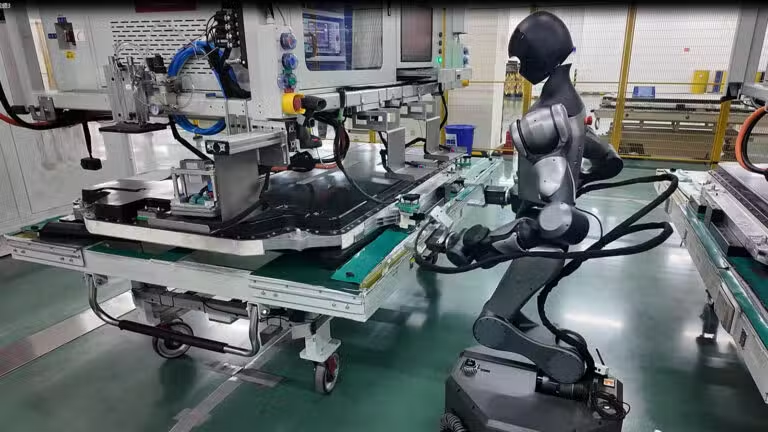
The world's largest battery maker CATL deploys Galbot's heavy-load humanoid robots, revolutionizing smart production lines and factory automation with embodied intelligence.
The global race to automate manufacturing just got a significant jolt, and it’s coming from an unexpected corner of the battery world. CATL, the undisputed titan in power battery manufacturing, has officially teamed up with Chinese humanoid robotics firm Galbot, marking a crucial inflection point for factory automation and, frankly, the future of industrial labor. This isn't just another incremental upgrade; it’s a strategic move that places advanced humanoid robots directly into the high-stakes, high-volume environment of battery production, fundamentally changing how these critical components are made and potentially scaled for the masses.
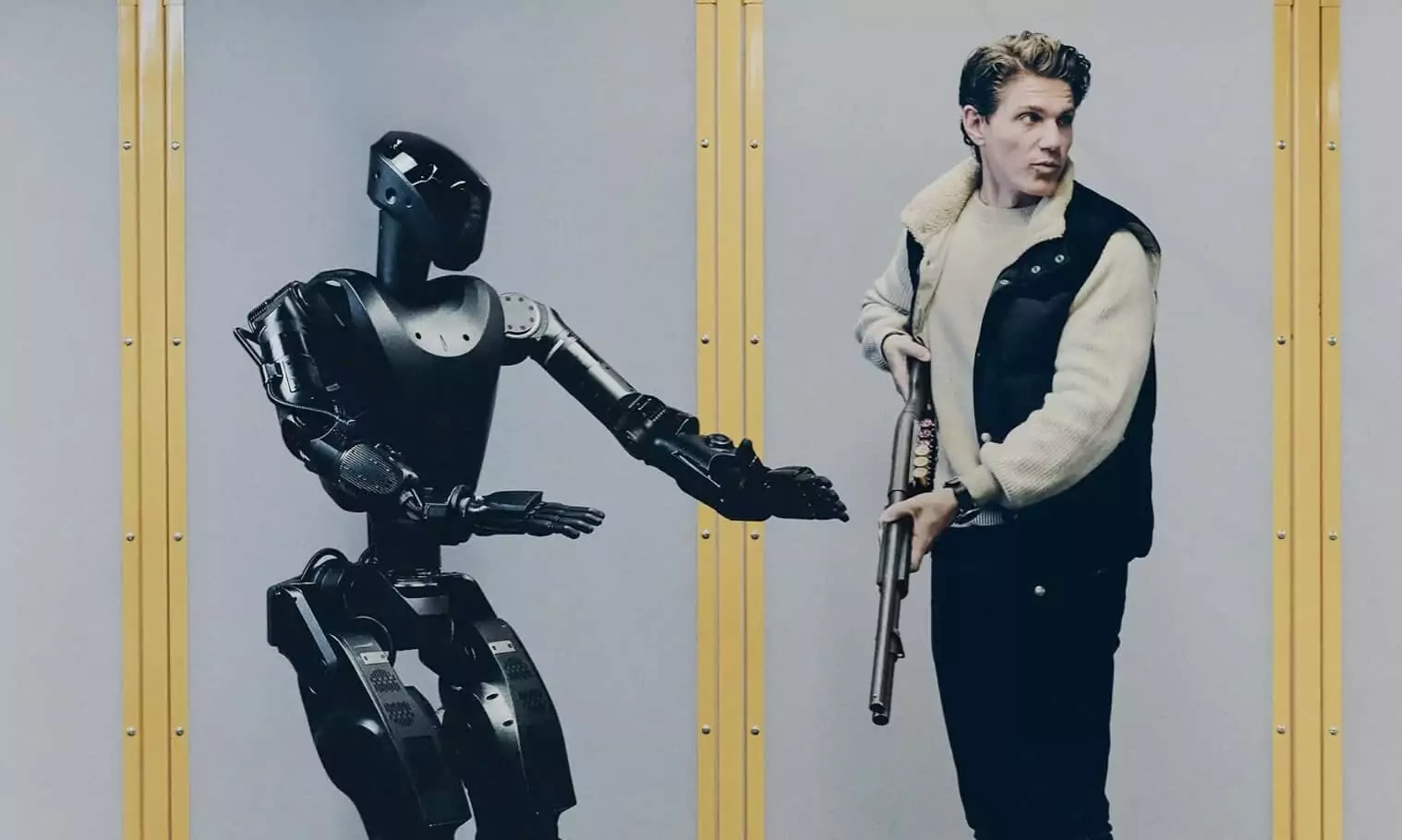
Here’s the core of what happened: CATL and Galbot signed a strategic cooperation agreement aimed at deploying "embodied-intelligence robots" on a massive scale, starting with CATL’s own smart production lines. The star of this partnership is the Galbot S1, a heavy-load humanoid robot that has already begun working in CATL factories, tackling demanding tasks like material handling and picking with impressive dexterity and autonomy. This collaboration is a tangible step towards a future where human-like machines work alongside, or in place of, human workers in some of the most complex and vital manufacturing processes on the planet.
The Galbot S1 is no ordinary robot; it's engineered for intensity. With a 50-kilogram dual-arm payload capacity, vision-only centimeter-level positioning, and 360-degree omnidirectional obstacle avoidance, it’s built to navigate and execute precise, high-intensity tasks autonomously. Critically, these robots are powered by CATL’s own advanced batteries, ensuring an 8-hour operational life and integrating the robotics solution deeper into CATL’s technological ecosystem. This isn't just a supplier relationship; it's a symbiotic pairing where CATL's core product enables the very automation that will enhance its production capabilities.
The deployment of the Galbot S1 is focused on module and battery pack production, where it will perform long-running autonomous work. This means tasks traditionally requiring significant manual labor, precision, and endurance are now being handled by humanoid machines. For CATL, a company already at the forefront of battery innovation, this represents a natural evolution of their smart manufacturing strategy, building on earlier successes such as the world’s first humanoid-robot-enabled battery pack production line at their Luoyang base.
Beyond the factory floor, this partnership also signals a significant development in the nascent ecosystem for humanoid robotics. CATL’s established "Ning Service," which previously focused on the inspection, maintenance, and recycling of power batteries, will now extend to these embodied-intelligence robots. This move is ambitious, as the two companies plan to leverage this expansion to establish what they describe as the world’s first aftermarket service standard for embodied intelligence, a crucial piece of infrastructure needed to scale such advanced robotics globally.
Why this matters for global innovation
From an ecosystem insider's perspective, this partnership is far more than just a factory upgrade; it’s a profound signal about the future of global manufacturing and the startup landscape. We've seen a surge in interest and investment in humanoid robotics over the past few years, with companies like Figure AI, Boston Dynamics, Tesla, and Sanctuary AI capturing headlines with their ambitious designs. What makes the CATL-Galbot collaboration particularly impactful is its immediate, practical application in a high-volume, critical industry. This isn't a lab demonstration; it's scaled deployment in real-world production.
The human angle here is undeniable. Battery manufacturing, especially for electric vehicles and grid storage, is experiencing unprecedented demand. This rapid scaling often runs into challenges with labor availability, consistency, and safety for repetitive, strenuous tasks. By deploying heavy-load humanoid robots, CATL isn't just chasing efficiency; it's addressing a fundamental bottleneck in the global energy transition. It allows for increased output, potentially lower costs, and a more resilient supply chain, which is incredibly important for North American markets reliant on global battery supply.
The concept of "embodied intelligence" is worth unpacking for a moment, as it's the core differentiator here. Unlike traditional industrial robots, which are typically fixed in place and perform highly specialized, repetitive actions, embodied-intelligence robots like the Galbot S1 are designed for greater versatility and adaptability. They navigate dynamic environments, interpret visual cues, and can handle a wider range of tasks, often with a more human-like dexterity. This flexibility is a game-changer for factories that need to adapt quickly to changing production demands or product iterations, moving beyond the rigid automation of the past.
For the broader startup ecosystem, this move validates the immense potential of humanoid robotics. It shifts the narrative from futuristic concepts to immediate industrial utility. Venture capital has poured into this space, but tangible, at-scale deployments like this one provide crucial proof points that can accelerate further investment and innovation. It also highlights the growing sophistication of the Chinese robotics sector, which is rapidly catching up and, in some cases, leading in practical applications. My read is that this accelerates the global race, putting pressure on Western robotics firms to not just innovate but to deploy at scale.
What comes next for manufacturing and beyond
The implications of CATL teaming with Galbot to scale humanoid robots extend far beyond battery factories. This partnership sets a precedent that other heavy industries, from automotive assembly to logistics and even construction, will undoubtedly observe closely. The ability of a humanoid robot to handle a 50kg payload with precision and work an 8-hour shift autonomously points to a future where these machines take on some of the most demanding and dangerous jobs, improving safety and productivity across the board. This isn't about replacing humans wholesale, but about augmenting our capabilities and freeing up human workers for more complex, creative, and supervisory roles.
For North America, this development underscores the urgent need for investment in domestic robotics and automation. While the Inflation Reduction Act (IRA) is driving significant battery manufacturing investment in the U.S. and Canada, the labor requirements and efficiency challenges remain. If CATL can significantly boost its output and efficiency through humanoid robots, it creates a competitive benchmark that North American gigafactories will eventually need to match. This could spur greater collaboration between tech startups and established manufacturers in the region to develop and deploy similar embodied intelligence solutions, or even look to partner with existing leaders in the space.
Looking ahead, the expansion of CATL’s "Ning Service" to include these robots is a critical, often overlooked, aspect of scaling new technologies. Developing an aftermarket service standard for embodied intelligence is foundational infrastructure. It means that as these robots become more pervasive, there will be established protocols for their maintenance, repair, and even eventual recycling. This kind of standardization reduces operational risk for adopters and makes the technology more appealing for widespread deployment, accelerating its journey from niche application to industrial commonplace.
Ultimately, what we're witnessing is the next wave of industrial revolution, powered by AI and advanced robotics. The CATL-Galbot partnership is a confident step into a future where humanoid robots are not just sci-fi concepts but integral parts of our global supply chains. It’s a powerful testament to the relentless pursuit of efficiency and innovation that defines the startup ecosystem, and it signals a future where the manufacturing floor will look dramatically different, more automated, more intelligent, and potentially, far more productive than anything we’ve seen before.
Frequently asked questions
What is the partnership between CATL and Galbot?
CATL and Galbot have formed a strategic cooperation to jointly scale the deployment of embodied-intelligence humanoid robots, specifically the Galbot S1, in CATL's battery factories. This aims to upgrade smart production lines and expand globally.
What is the Galbot S1 robot's primary function at CATL?
The Galbot S1 is a heavy-load humanoid robot designed for high-intensity tasks like material handling and picking on the production line. It performs long-running autonomous work in module and battery pack production, replacing manual labor.
How do CATL's batteries support the Galbot S1?
CATL's advanced batteries power the Galbot S1, featuring particle-grading cathode technology, a low-lithium-consumption anode, and a bionic self-healing electrolyte. This configuration ensures an 8-hour battery life, long service, and high safety.
What is "embodied-intelligence robotics"?
Embodied-intelligence robotics refers to robots that can perceive, understand, and interact with their physical environment in a sophisticated, human-like manner. The Galbot S1, with its vision-only positioning and obstacle avoidance, is an example in industrial settings.
What is the "Ning Service" expansion?
CATL's "Ning Service," which traditionally covers power battery inspection, maintenance, and recycling, will now extend to embodied-intelligence robots. The goal is to establish the world's first aftermarket service standard for these advanced robots.
Where else has CATL deployed humanoid robot technology?
CATL previously launched the world's first humanoid-robot-enabled battery pack production line at its facility in Luoyang, Henan province, showcasing its ongoing commitment to advanced factory automation