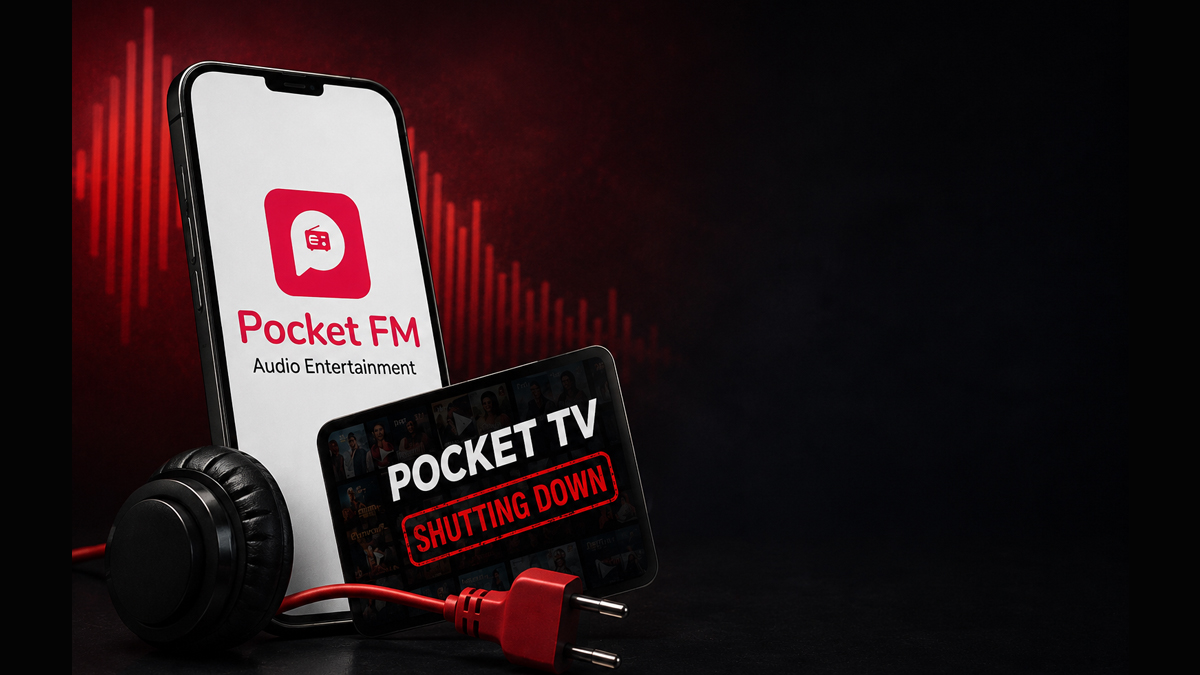
The audio series giant pulls the plug on its promising microdrama venture, sending ripples through the tech and media world.
What happens when a high-flying digital entertainment startup decides to pull the plug on a promising new venture? That's the question many in the tech and media world are asking after Pocket FM, the popular audio series platform, quietly shut down its Pocket TV microdrama vertical. For North American consumers, content creators, and investors, this strategic pivot sends a clear signal about the challenges of breaking into the hyper-competitive short-form video market.
The move represents a significant retreat from a burgeoning content category that Pocket FM had invested in, aiming to capture a slice of the mobile-first video audience. Pocket TV offered short, serialized video dramas designed for quick, on-the-go consumption, often featuring cliffhanger endings to encourage binge-watching. It was a direct play for the attention economy, hoping to translate Pocket FM's success in audio storytelling into visual narratives.
Pocket FM, originally a rising star in India's digital audio landscape, has made substantial inroads into the North American market. The company has successfully cultivated a loyal listener base for its diverse catalog of audio series, spanning genres from romance to thrillers. With significant venture capital backing and a valuation that pushed it into unicorn territory, Pocket FM had ambitious plans to become a global entertainment powerhouse. Its core business thrives on a premium model, often requiring users to pay for episodes or subscribe, a strategy that has proven effective for audio.
The decision to launch Pocket TV was, in many ways, an understandable expansion. The global appetite for short-form, episodic video content has exploded, largely fueled by platforms like TikTok, YouTube Shorts, and Instagram Reels. Furthermore, specific microdrama apps, particularly those originating from Asia, have seen surprising traction in North America, demonstrating that there's a hungry audience for bite-sized, serialized video stories. These apps often leverage a similar monetization model to Pocket FM's audio series, employing in-app purchases for episode unlocks.
However, the abrupt closure of Pocket TV suggests that the realities of the video market are far more challenging than anticipated. While Pocket FM has not publicly detailed its reasons, industry observers point to several likely factors. The cost of producing video content, even short-form microdramas, is substantially higher than audio. This includes everything from scripting and casting to filming, editing, and post-production, all while maintaining a consistent level of quality to attract and retain viewers. Scaling such an operation while competing against established giants with vast resources is an uphill battle.
Why This Matters for the Streaming Wars
Pocket FM's pivot isn't just an isolated event for one company; it’s a bellwether for the broader streaming and digital media landscape, especially in North America. For years, the mantra in tech has been "video first," leading to a gold rush where every platform, from social media giants to niche content providers, has attempted to launch its own short-form video offering. The closure of Pocket TV suggests that this "video first" approach, particularly for new entrants, is hitting a significant reality check.
The market for short-form video is not just saturated; it's dominated by a few Goliaths. TikTok, with its immense user base and sophisticated recommendation algorithms, sets a formidable benchmark. YouTube Shorts and Instagram Reels, backed by Google and Meta respectively, offer massive distribution and existing user networks. Breaking through this wall requires not just compelling content, but also an astronomical user acquisition budget and a clear, sustainable monetization strategy that can outcompete free ad-supported models.
While there's undeniable audience demand for serialized, mobile-first video storytelling – a trend exemplified by the success of apps like ReelShort or FlexTV, which have climbed app store charts in North America – the challenge lies in differentiation and economic viability. These successful players often invest heavily in acquiring or producing content that resonates specifically with their target demographic, often leveraging lower production costs or a more aggressive pay-per-episode model. Pocket TV's struggle highlights that simply having a product in the space is not enough; the content, marketing, and monetization must be perfectly calibrated against fierce competition and high user expectations.
What This Means for Content Creators and the Future of Niche Entertainment
For content creators who had begun producing microdramas for Pocket TV, this closure is a stark reminder of the inherent volatility of platform-dependent creative work. The digital economy, while offering unprecedented opportunities for creators, also comes with the risk that platforms can change strategy, pivot, or shut down, leaving creators scrambling to find new homes for their work and audiences. This incident underscores the importance of creators diversifying their distribution channels and not relying solely on a single platform.
From a consumer perspective, the loss of Pocket TV means one fewer option in an already fragmented entertainment landscape. While many users will likely migrate to other short-form video apps, it also raises questions about the long-term sustainability of niche content offerings. Will the market consolidate further, leaving only the largest players or those with exceptionally strong, unique content propositions?
My read on this situation is that it signals a broader recalibration within the digital entertainment industry. The era of "growth at all costs" for every new content format might be yielding to a more disciplined focus on profitability and core competencies. Pocket FM's decision to exit Pocket TV is likely a strategic one to double down on its highly successful audio business, where it has established a strong competitive moat and a proven monetization model. Audio entertainment, while also competitive, has different production economics and a distinct audience engagement pattern.
The move also connects to a broader trend of tech companies shedding non-core assets or experimental ventures that haven't demonstrated a clear path to profitability or scalable success. As venture capital becomes more discerning and the economic climate shifts, companies are under increasing pressure to demonstrate efficiency and focus. For Pocket FM, concentrating on its audio series strengthens its position as a leader in that specific vertical, potentially freeing up resources for further innovation and market expansion within its established strong suit.
Ultimately, Pocket FM's decision to close Pocket TV serves as a valuable lesson for other digital entertainment platforms and investors alike. It highlights the immense difficulty of launching and scaling a new video product in an already crowded and fiercely competitive market. While the allure of short-form video remains potent, success demands not just compelling content, but also an incredibly robust and sustainable business model, a deep understanding of audience acquisition costs, and a clear competitive advantage that can withstand the might of established giants. For Pocket FM, the future now clearly lies in the power of sound, not sight, as it seeks to solidify its dominance in the burgeoning audio series market.
Frequently asked questions
What happened to Pocket TV?
Pocket TV, Pocket FM's microdrama vertical, was recently shut down. This strategic decision by the popular audio series platform marks a significant pivot in its content strategy.
Why did Pocket FM shut down Pocket TV?
The article preview suggests it was a strategic pivot, likely to re-focus on its core audio series business or due to market performance, although specific reasons are not detailed.
How does this impact content creators?
Content creators involved with or planning for Pocket TV will need to adjust their strategies, potentially seeking new platforms for their microdrama content.
What does this mean for investors in Pocket FM?
For investors, this move signals a shift in company strategy, potentially aimed at strengthening core operations and optimizing resource allocation.
Is Pocket FM still operating?
Yes, Pocket FM, the popular audio series platform, continues to operate. The shutdown specifically pertains to its Pocket TV microdrama vertical.
What is a microdrama vertical?
A microdrama vertical is a specialized platform or segment dedicated to very short, episodic video dramas, typically optimized for mobile consumption and quick viewing.