Apple's decision to open source post-quantum cryptography in corecrypto fortifies global digital security against the looming quantum threat.
The global digital landscape is undergoing a profound transformation, driven by the looming threat of quantum computing and the proactive steps taken by technology giants to fortify the foundations of secure communication. A pivotal moment in this evolution arrived with Apple's decision to open source its post-quantum cryptography implementations within corecrypto, the cryptographic library underpinning its vast ecosystem. This move marks a significant shift, inviting independent expert evaluation and setting a new precedent for transparency and collaborative security in an era defined by accelerating technological threats.
Before this strategic shift, the digital world operated on the bedrock of cryptographic algorithms that, while robust against conventional attacks, face an existential threat from the theoretical capabilities of future quantum computers. These widely used public-key encryption algorithms, essential for securing everything from personal messages to global financial transactions, were considered impregnable. However, the anticipated advent of large-scale quantum machines capable of executing algorithms like Shor's or Grover's posed a "harvest now, decrypt later" risk. This scenario suggested that sensitive encrypted data, captured today, could be stored and decrypted once quantum computing power reached maturity, potentially compromising decades of confidential information.
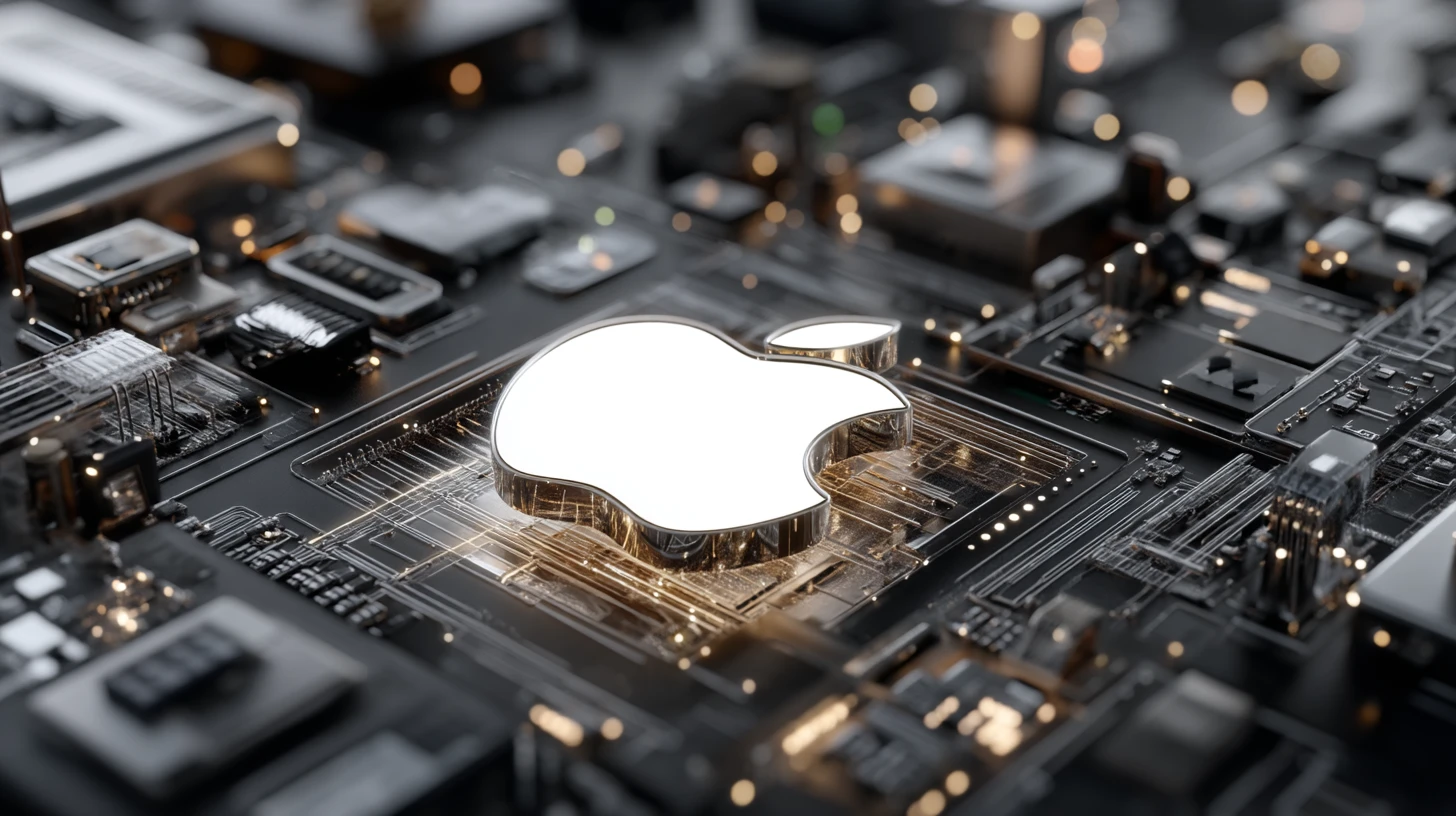
Apple's corecrypto library epitomized this pre-quantum security paradigm. Running on over 2.5 billion active devices, corecrypto provides critical functions such as encryption, hashing, random number generation, and digital signatures for all Apple operating systems and services. Its integrity is paramount, as a critical bug within it has the potential to compromise the security and reliability of every application and feature that relies upon it. For years, the development and verification of such a foundational component remained largely within the confines of Apple's internal processes, adhering to rigorous internal testing but without the broad scrutiny of the external cryptographic community.
The Imperative for Post-Quantum Resilience
The recognition of this impending quantum threat spurred a global race to develop and standardize post-quantum cryptography (PQC), algorithms designed to resist attacks from both classical and quantum computers. For Apple, the integration of PQC was not a speculative future project but an immediate necessity. In 2024, the company proactively added post-quantum cryptography support to its corecrypto library. This integration was critical for applications that handle sensitive encrypted communications and data, specifically mentioning iMessage, VPNs, and TLS networking. The decision to embed these new algorithms reflected an understanding that migrating to quantum-resistant standards is a complex, multi-year undertaking that required early adoption.
Key Timeline and Scope:
2024: Apple integrates post-quantum cryptography support into corecrypto for sensitive applications like iMessage, VPNs, and TLS networking.
May 2026: Apple open sources its PQC implementations, including proofs and verification tools.
Devices Impacted: Over 2.5 billion active Apple devices.
Algorithms Standardized by NIST: ML-KEM and ML-DSA chosen for security, performance, and compact key/ciphertext sizes.
The company acknowledged the immense responsibility of modifying corecrypto, stating that it is "conservative when adding new code to the library and make exceptional efforts to be comprehensive in our testing." This conservative approach is rooted in the library's widespread deployment across diverse Apple devices and chips, necessitating cryptographic code written in portable C to ensure consistent behavior across all platforms. Furthermore, Apple indicated its commitment to apply protections against timing attacks and randomize some internal computations to make attacks harder, demonstrating a comprehensive security posture even prior to the full public release of its PQC work.
A Paradigm Shift: Open Sourcing and Formal Verification
The most significant development, and the core of the recent announcement, is Apple's decision to publish its post-quantum cryptography implementations in corecrypto as open source. This release extends beyond just the code, including mathematical proofs and verification tools designed for independent expert evaluation. This level of transparency allows external researchers globally to review the work, scrutinize its mathematical underpinnings, and reproduce the company’s analysis, fostering a collaborative approach to securing the digital future.
Central to Apple's confidence in its PQC implementations is its advanced approach to formal verification. This methodology employs mathematical methods to rigorously prove that software behaves precisely as intended under predefined conditions. Recognizing the limitations of conventional testing alone, Apple invested in building a custom verification system. After evaluating existing tools and verified implementations, the company developed a framework that supports multiple programming languages, codebases, and existing developer workflows. This bespoke system combines both established and newly developed tools to verify implementations against official FIPS standards, ensuring adherence to global security benchmarks.
The specific post-quantum algorithms selected for implementation were ML-KEM and ML-DSA, both standardized by the U.S. National Institute of Standards and Technology (NIST). These algorithms were chosen for a combination of critical attributes: their robust security properties, efficient performance, compact key and ciphertext sizes, and demonstrated functional correctness. The implementations underwent a multi-faceted validation process, encompassing conventional testing, extensive simulation, independent review, and, crucially, formal verification.
Apple collaborated with Galois, a research and engineering company specializing in formal verification, to develop a specialized tool. This tool generates Isabelle theories from Cryptol models and establishes a critical link between portable C code and Cryptol. Isabelle is a generic proof assistant, while Cryptol is a domain-specific language for specifying and verifying cryptographic algorithms. This integration, facilitated by a Cryptol-to-Isabelle translator, allows cryptographic models to be recreated in Isabelle for independent mathematical analysis, providing an unprecedented layer of assurance.
Key Takeaways from Apple's Open Source PQC Initiative:
Enhanced Transparency: Open sourcing allows global independent expert evaluation, increasing trust and resilience.
Advanced Verification: Integration of formal verification with conventional testing, proving software correctness mathematically.
Proactive Security: Early adoption of NIST-standardized PQC algorithms (ML-KEM, ML-DSA) against quantum threats.
Collaborative Development: Partnership with Galois on specialized verification tools.
Improved Robustness: Formal verification identified and fixed a critical flaw before deployment, demonstrating its value.
The efficacy of this advanced verification system was demonstrably proven. During the verification process, issues were identified that conventional testing methods would likely not have detected. One notable flaw involved a missing step in an early ML-DSA implementation. In rare cases, this missing step could cause inputs to exceed their expected range, leading to incorrect output. Crucially, this flaw was identified and fixed before the deployment of the PQC algorithms, underscoring the profound value of formal verification in safeguarding critical cryptographic infrastructure. Apple stated its belief that "the strongest assurance possible comes from combining formal verification with conventional methods and critically evaluating the end-to-end results," a sentiment that resonates deeply within the global cybersecurity community.
The World Now: A New Era of Trust and Collaboration
Apple's move to open source its quantum-resistant encryption, coupled with its sophisticated verification methodologies, heralds a new era for global cybersecurity. The implications extend far beyond Apple's ecosystem, influencing industry best practices, fostering greater collaboration, and accelerating the worldwide transition to quantum-safe standards.
Globally, the open availability of Apple's PQC implementations and verification tools provides a valuable resource for other technology companies, academic researchers, and national cybersecurity agencies. It allows for broader scrutiny, which can expose vulnerabilities more rapidly and strengthen the algorithms through collective intelligence. This transparent approach, particularly from a company with Apple's market presence and user base, can significantly reduce the "security by obscurity" mindset that has historically characterized some proprietary cryptographic implementations. The global developer community now has a robust reference implementation to study, adapt, and build upon, potentially harmonizing PQC deployment across diverse platforms and applications.
The emphasis on formal verification also sets a new gold standard for software assurance, especially in critical security components. As digital systems become increasingly complex and intertwined across global networks, traditional testing methods alone are often insufficient to guarantee freedom from subtle, yet potentially catastrophic, flaws. The success of Apple's system in identifying a pre-deployment bug demonstrates the tangible benefits of mathematical proofs in building truly resilient software. This approach is likely to inspire other organizations, particularly those operating in highly sensitive sectors like finance, critical infrastructure, and national defense, to adopt similar rigorous verification processes.
Furthermore, the global shift to post-quantum cryptography is not merely a technical upgrade; it is a strategic imperative for long-term data privacy and national security. Nations worldwide are grappling with how to protect their most sensitive communications and data archives from future quantum attacks. By openly contributing its robust, formally verified PQC implementations, Apple is not only securing its own vast user base but also contributing significantly to the global collective defense against quantum threats. This proactive stance helps mitigate the risk of a "crypto-apocalypse" where a quantum computer could instantaneously render current encryption useless, exposing a vast trove of historical and real-time data.
The continuation of fundamental security practices, such as writing cryptographic code in portable C for consistency across different devices and chips, and implementing protections against timing attacks and internal computation randomization, remains critical. These measures reflect a holistic approach to security that integrates cutting-edge PQC with established defensive programming techniques, acknowledging that even quantum-resistant algorithms must be implemented carefully to resist all forms of attack. The global cybersecurity community will undoubtedly draw lessons from Apple's comprehensive strategy, integrating both future-proofing and present-day hardening techniques.
In essence, Apple's decision to make its quantum-resistant encryption open source is a powerful statement about the future of digital trust. It underscores a commitment to transparency, rigorous verification, and collaborative security in the face of evolving threats. The world is transitioning from an era of theoretical quantum vulnerability to one where proactive, open, and mathematically proven solutions are becoming the norm, driven by the actions of leading technology innovators.
Frequently asked questions
What is Apple's new encryption development?
Apple has made its quantum-resistant encryption implementations open source within its corecrypto library. This move aims to fortify digital communication against future threats posed by quantum computers.
Why is quantum-resistant encryption important?
Quantum-resistant encryption is crucial because traditional encryption methods could be broken by powerful quantum computers, potentially compromising all current digital security.
What is corecrypto?
Corecrypto is Apple's fundamental cryptographic library, providing the secure foundation for many of its operating systems and applications.
Will this impact my Apple devices?
Yes, by integrating these open-source post-quantum cryptography implementations, future Apple devices will inherently become more secure against quantum computing threats.
What does "open source" mean for this encryption?
Open sourcing means the code is publicly available for review, use, and modification, promoting transparency, collaboration, and faster adoption of robust security measures across the industry.
When will this open source encryption be widely adopted?
While Apple has made it open source, widespread adoption across the industry will depend on further integration into various systems and adherence to evolving post-quantum cryptography standards.