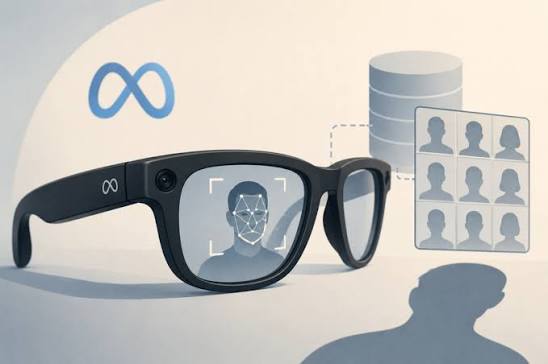
WIRED uncovers 'NameTag' system in Meta AI app for Ray-Ban glasses, raising privacy alarms despite Meta's denials.
Meta may not have launched facial recognition on its smart glasses for consumers, but a new report suggests the tech giant has already laid significant groundwork for such a feature behind the scenes. This development raises immediate questions about privacy and the future of wearable technology, impacting millions of users across the globe.
According to an in-depth investigation by WIRED, Meta has quietly integrated code for an unreleased facial-recognition system into the Meta AI companion app, which is essential for its Ray-Ban and Oakley smart glasses. The revelation points to a future where your smart spectacles could automatically identify people in your field of vision, a capability that brings both convenience and considerable ethical scrutiny.
The feature, internally dubbed "NameTag," is reportedly designed to identify individuals captured by the glasses' camera and notify the wearer when it recognizes someone. While Meta assures nothing has been activated for users, the report claims that core components of this system have been included in app updates since January 2026. This means the underlying architecture is already in place, awaiting a potential flip of a switch.
WIRED's analysis further suggests that NameTag is embedded within the Meta AI app, an application required for several smart glasses functions and reportedly downloaded more than 50 million times. If enabled, the system would convert faces captured by the glasses into biometric signatures, commonly known as faceprints, and compare them against faceprints stored locally on a user's phone. Recognized individuals would trigger notifications, while other faces could be cropped, indexed, and stored in a "pending" folder, creating a digital rolodex of faces.
The publication also reported that three distinct AI models linked to NameTag have already been deployed from Meta's servers directly to users' devices. These models perform critical functions: one detects faces, another crops them precisely, and a third converts these visual inputs into the unique biometric data points that form a faceprint. Earlier iterations of the app even reportedly contained references to this feature under the name "Connections," suggesting its purpose was to help users "remember the people you met," hinting at a social utility for the technology.
The Shadow of Past Controversies
This isn't Meta's first dance with facial recognition technology, and its history casts a long shadow over these new revelations. The company, then known as Facebook, launched its facial recognition-based photo tagging system back in 2010. Over the ensuing decade, it built one of the world's largest consumer facial recognition systems, amassing a vast database of biometric data. This system, while convenient for many, became a flashpoint for privacy advocates and regulators globally.
The scale of Facebook's facial recognition system, and the perception of its pervasive and often opt-out nature, led to significant legal challenges. The company faced numerous lawsuits over its collection and use of biometric data, resulting in billion-dollar settlements, most notably a $650 million payout in 2020 over a class-action lawsuit in Illinois. These legal battles, coupled with mounting public and regulatory pressure, ultimately led Meta to shut down its facial recognition system in 2021 and delete more than a billion faceprints. This history makes the current report particularly sensitive, as it suggests a potential return to a highly scrutinized technology, albeit in a new form factor.
Meta's Careful Dance
Unsurprisingly, Meta has pushed back strongly against the report's conclusions, framing the findings as premature and speculative. Ryan Daniels, a Meta spokesperson, told WIRED that the findings merely reflect the company's ongoing exploration of potential technologies. "Nothing has shipped to consumers and no final decision has been made on what to do here, if anything," Daniels stated. He further emphasized that Meta is not building a central facial-recognition database and committed that the company would be transparent if it ever decided to launch such a feature, signaling an awareness of past criticisms and a desire to manage public perception.
Adding to the company's defensive stance, Meta's Communications Director, Andy Stone, took to social media to criticize the report. Stone argued that descriptions of the technology as being secretly deployed were misleading and held no truth, underscoring Meta's position that these are internal explorations, not active deployments. This corporate messaging highlights the tightrope Meta walks: innovating in a cutting-edge field while simultaneously navigating intense public scrutiny and regulatory concerns, particularly around privacy-invasive technologies.
The independent verification of WIRED's findings, however, lends credibility to the report. Cooper Quintin of the Electronic Frontier Foundation's Threat Lab indicated that the feature appeared remarkably close to being functional, despite not being publicly available. Furthermore, an independent security researcher known as Buchodi reportedly tested the system by adding a faceprint of French philosopher Michel Foucault and successfully triggered a "Person recognised" notification, demonstrating the system's operational capabilities when provided with the necessary data. This functional proximity suggests that while Meta may not have activated the feature for end-users, the technical hurdles for doing so appear to be largely overcome.
The prospect of widely available smart glasses equipped with facial recognition presents a paradigm shift in how individuals interact with the world and how their identities are processed. While proponents might highlight potential benefits for memory assistance or accessibility, the privacy implications are immense. The ability for a casual observer, or even a bad actor, to passively identify individuals without their explicit consent opens up new avenues for surveillance, data collection, and potential abuse, especially in crowded urban environments.
As Meta continues its ambitious push into augmented reality and wearable technology, the debate around facial recognition will intensify. The company faces the delicate task of balancing technological innovation with its responsibility to user privacy and ethical data handling. Any future deployment of "NameTag" or similar features would undoubtedly reignite conversations about the erosion of anonymity in public spaces, the scope of biometric data collection, and the need for robust regulatory frameworks that can keep pace with rapid technological advancements. The path forward for Meta and its smart glasses will be closely watched by privacy advocates, regulators, and consumers alike.
Frequently asked questions
Has Meta launched facial recognition on its smart glasses for consumers?
No, Meta spokesperson Ryan Daniels stated that nothing has shipped to consumers and no final decision has been made. However, a WIRED investigation claims core components of an unreleased facial recognition system, internally known as 'NameTag', have been found in the Meta AI companion app since January 2026.
What is 'NameTag' in the Meta AI app?
'NameTag' is an internal name for a facial recognition system reportedly designed to identify people captured by Meta's smart glasses camera and alert the wearer when someone is recognized.
How would Meta's 'NameTag' system work if enabled?
If enabled, the system would convert faces captured by the glasses into biometric signatures (faceprints), compare them against stored faceprints on the user's phone, and trigger notifications for recognized individuals.
What is Meta's history with facial recognition technology?
Facebook launched photo tagging with facial recognition in 2010, building one of the world's largest systems, but shut it down in 2021 after facing legal challenges and settlements over biometric data collection.
What is Meta's response to the WIRED report?
Meta spokesperson Ryan Daniels said the findings reflect ongoing exploration, not a shipped product, and denied building a central facial-recognition database. Communications Director Andy Stone criticized claims of secret deployment as misleading.
Which Meta smart glasses models are affected by this discovery?
The code for the facial recognition system was reportedly found in the Meta AI companion app used with Meta's Ray-Ban and Oakley smart glasses.