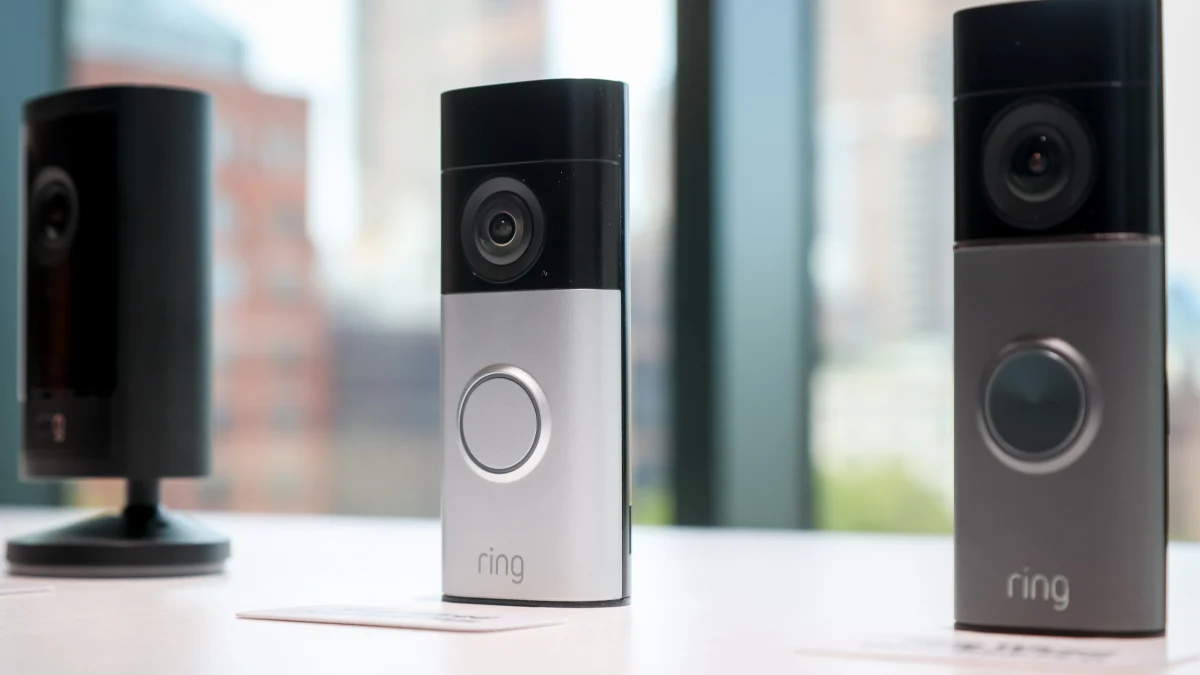
A new class-action lawsuit targets Amazon's popular Ring doorbell cameras for unauthorized facial recognition, intensifying privacy concerns around smart home tech.
Amazon's Ring Faces Another Class-Action Lawsuit Over Facial Recognition, Raising Fresh Privacy Alarms
In an age where smart devices promise convenience, a new federal lawsuit is shining a harsh spotlight on just how much personal data might be collected without our knowledge or consent. Amazon's popular Ring doorbell cameras are once again at the center of a privacy firestorm, this time over a feature designed to identify familiar faces, but which allegedly tracks millions of passersby.
The core of the issue boils down to Ring's "Familiar Faces" feature. While designed to tell homeowners who's at their door using artificial intelligence, the lawsuit claims it also collects and stores facial recognition data from anyone who walks by the camera, all without their explicit permission. That's a significant claim, suggesting a pervasive level of surveillance from devices many people consider benign home security tools.
Charles Sigwalt, a Virginia resident, is the plaintiff behind the class-action suit, filed in federal court in Seattle. Sigwalt alleges that his own facial images were captured and stored by Ring cameras at the homes of his friends and family, despite him never consenting to such data collection. He is seeking at least $5 million in damages for the class, with the suit broadly claiming "millions of other Americans passed by a Ring security camera and unknowingly had their facial recognition information collected." Amazon, for its part, has declined to comment on the ongoing legal action.
The "Familiar Faces" feature is an optional setting within Ring's ecosystem. When activated, it uses AI to learn and remember individuals, allowing Ring to send notifications that can include specific names when recognized people approach a home or business. However, the lawsuit contends that the system's underlying data collection practices extend far beyond just the homeowner's approved contacts, potentially creating a vast database of biometric information on unsuspecting individuals.
This isn't the first time Amazon's Ring unit, which the tech giant acquired for $1 billion in 2018, has faced intense scrutiny over its privacy practices. The company has a history of navigating public backlash and regulatory challenges concerning how its cameras and data are used, particularly regarding surveillance capabilities and interactions with law enforcement.
A Pattern of Privacy Concerns
The latest lawsuit adds to a growing list of privacy controversies that have dogged Ring for years, painting a picture of a company frequently at odds with consumer expectations for data protection. In February of this year, Ring drew significant criticism for a service advertised during the Super Bowl, which claimed to help users find lost dogs by activating its neighborhood network of cameras. Privacy advocates and users alike raised concerns that such a feature could easily be deployed to surveil entire neighborhoods or broad areas, extending the reach of personal security cameras into public spaces in an unprecedented way.
Following this backlash, Ring also ended an unrelated partnership with Flock Safety. Flock Safety is a company that deploys license plate readers and cameras, often used by law enforcement agencies, further highlighting the ongoing tensions between home security technology and broader public surveillance. The ending of this partnership was a direct response to the scrutiny Ring faced over its data-sharing practices and the potential for its technology to be integrated into larger surveillance networks.
Perhaps one of the most damning incidents came in 2023 when the U.S. Federal Trade Commission (FTC) reached a $5.8 million settlement with Ring over privacy allegations. The FTC's investigation revealed that Ring employees had "unrestricted access" to customers' sensitive video data, allowing them and contractors to view and download it. More alarmingly, the settlement included allegations of a former Ring employee spying on female customers in their home bedrooms and bathrooms. While Amazon denied any wrongdoing as part of that settlement, the incident underscored significant vulnerabilities in Ring's internal data security and privacy protocols, shaking consumer trust.
Even before the FTC settlement, U.S. Democratic Senator Ed Markey alleged in 2022 that Ring violated people's privacy through its partnerships with law enforcement. Senator Markey claimed that these partnerships allowed law enforcement agencies access to some user footage without proper consent, raising questions about Fourth Amendment rights and the balance between public safety and individual privacy in the digital age. These repeated incidents illustrate a consistent struggle for Ring to assure users that their privacy is paramount.
What This Means for Smart Home Security
This class-action lawsuit is more than just another legal battle for Amazon; it represents a critical juncture for the entire smart home security industry and how it handles biometric data. As more devices integrate advanced AI features like facial recognition, the lines between personal security and pervasive surveillance become increasingly blurred. For the millions of Americans who own Ring doorbells or simply pass by them daily, the implications of unknowingly having their facial data collected and stored are profound.
Charles Sigwalt's suit, in his own words as reported, argues that Amazon's "conduct here represents a profound privacy failure for millions of people who are now being tracked by Amazon." This sentiment resonates deeply with a public increasingly wary of how their digital footprint is managed, especially when it involves sensitive biometric information that cannot be easily changed or replaced.
The outcome of this lawsuit could set a significant precedent for how companies are required to obtain consent for biometric data collection and how they manage that data. It forces a conversation about the responsibilities of technology companies to protect the privacy of not just their customers, but also the broader public who interact with their products daily. As facial recognition technology becomes more sophisticated and widespread, the need for robust legal frameworks and transparent corporate practices has never been more urgent.
Consumers will likely be watching closely to see if this legal action leads to clearer regulations or design changes that prioritize user consent and data security. The future of smart home devices, and the trust placed in them, hinges on these privacy concerns being addressed effectively and transparently, ensuring that convenience does not come at the cost of fundamental personal liberties.
Frequently asked questions
What is the new lawsuit against Amazon's Ring about?
The new lawsuit against Amazon's Ring doorbell cameras alleges that the company's facial recognition feature collects and processes personal biometric data without explicit user consent. This class-action suit raises significant privacy concerns regarding the unauthorized surveillance capabilities of smart home devices.
Why is Amazon's Ring being sued for facial recognition?
Ring is being sued over claims it collects and utilizes users' facial recognition data without their knowledge or consent, violating privacy laws and biometric data regulations.
What are the privacy concerns with Ring doorbells?
Privacy concerns include data collection, potential for unauthorized surveillance, sharing of footage with law enforcement, and now, the alleged use of facial recognition technology without consent.
Is Ring's facial recognition feature active by default?
The lawsuit implies unauthorized data collection, suggesting the feature might be active or processing data in a way that users are not explicitly opting into or fully aware of.
How does this lawsuit impact Ring users?
The lawsuit could lead to changes in Ring's data collection practices, potentially offering users more control over their biometric data and raising awareness about smart device privacy issues.
What are the broader implications for smart home device privacy?
This lawsuit highlights the growing need for clearer regulations and transparency regarding how smart home devices collect, process, and store sensitive personal data, pushing for stronger consumer privacy protections.