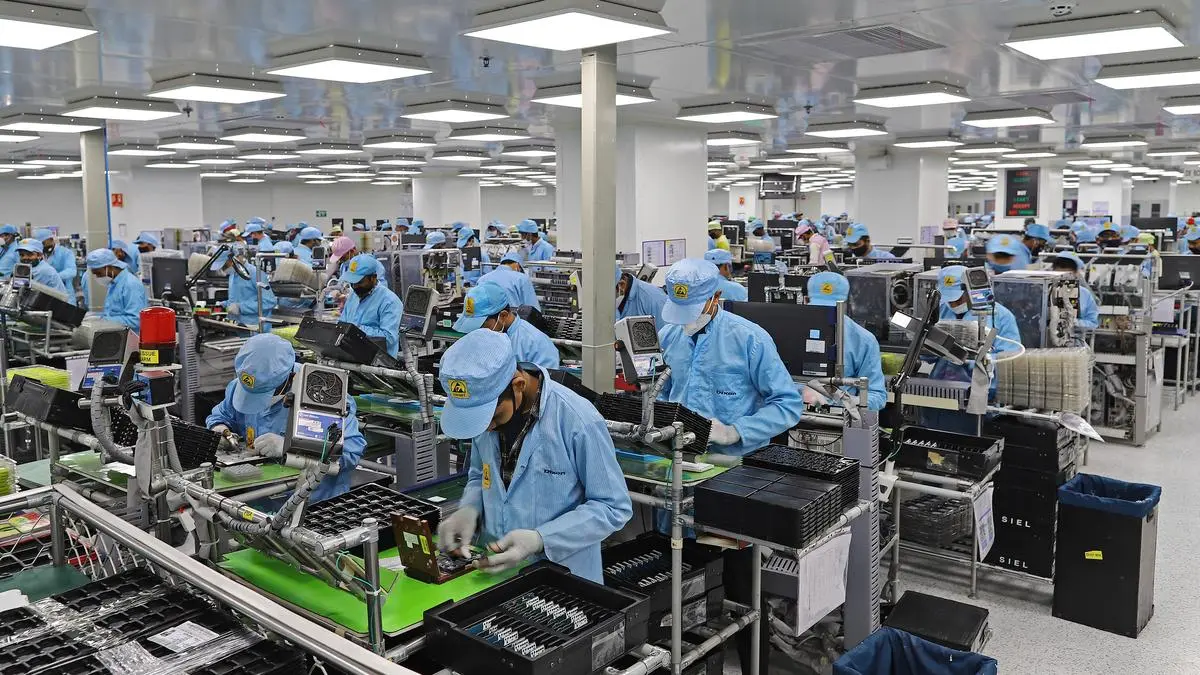
As Oracle discloses 21,000 cuts, a running list reveals how tech giants are culling workforces, citing AI amid record revenues.
Oracle Corp. recently disclosed a reduction of 21,000 employees over the past 12 months, representing a 13% decline in its workforce, with artificial intelligence cited as a significant factor. This substantial workforce adjustment, revealed in an annual financial regulatory filing, underscores a profound operational shift across the tech sector that challenges traditional valuations and redefines efficiency metrics for investors. The move signals a broader trend where tech giants leverage AI for growth while simultaneously streamlining human capital, impacting market sentiment regarding future labor costs and innovation pipelines. The Silicon Valley landscape is increasingly grappling with a paradox: companies reporting robust revenues and burgeoning backlogs concurrently with significant workforce reductions, often attributing these cuts to the strategic adoption of AI. Oracle explicitly stated that “the adoption and deployment of AI technologies across our operations have resulted, and may continue to result, in reductions to our workforce,” even as it redirects substantial savings toward new AI data centers, reflecting a recalibration of capital allocation. This pattern is not isolated, echoing through several major players in the global tech ecosystem, from enterprise software providers to social media platforms and cloud infrastructure giants. Across the industry, this year alone has seen a cascade of announcements. GitLab, for instance, cut approximately 350 workers, about 14% of its staff, to fund AI infrastructure investment and manage surging traffic from agentic AI workflows, with CEO Bill Staples noting a "generational rebuild" for 100x growth requirements. Similarly, Meta Platforms Inc. laid off some 8,000 employees, about 10% of its workforce, while repositioning approximately 7,000 into AI-focused roles, signaling a deep structural pivot. These actions, often accompanied by strong financial performance, suggest that the narrative around AI is shifting from pure innovation to operational leverage, pressuring companies to deliver higher returns with a leaner cost base.
What It Means
This wave of AI-driven layoffs is more than a cyclical adjustment; it represents a structural recomposition of the tech workforce, with profound implications for skill sets, organizational design, and venture capital deployment. The narrative that AI is merely automating repetitive tasks is evolving; we are witnessing a redefinition of what constitutes a "team" and what roles are essential in an AI-native enterprise. Companies are not just cutting fat acquired during the pandemic hiring spree; they are fundamentally rethinking their human capital strategies in anticipation of exponential efficiency gains. My read is that this trend will bifurcate the labor market further, creating intense demand for highly specialized AI engineering and prompt engineering talent, while simultaneously diminishing the need for middle management, support roles, and even some traditional engineering functions. This shift will inevitably impact startup strategies, pushing founders to build leaner operations from day one and to integrate AI into their core product development and operational workflows. For investors, this translates to a heightened scrutiny on a startup's AI strategy and its ability to achieve efficient scale without relying on a large, expensive headcount. The focus shifts from "growth at all costs" to "efficient growth" powered by intelligent automation.
Oracle Corp. reduced its global workforce by 21,000 employees, a 13% decline, over the past 12 months, attributing cuts in part to AI adoption while investing heavily in new AI data centers.
The Context
The current wave of tech layoffs, ostensibly driven by AI, occurs against a backdrop of several converging factors. The aggressive hiring sprees during the zero-interest rate policy (ZIRP) era and the pandemic-fueled digital acceleration created inflated headcounts at many tech firms. As interest rates normalized and investor sentiment shifted towards profitability over pure growth, companies began to scrutinize operational expenses more rigorously. AI, in this environment, emerged not just as a transformative technology for new product lines but as a powerful enabler for achieving unprecedented operational efficiencies. For years, AI was largely a research and development play, with significant investment in foundational models and theoretical breakthroughs. Now, with readily available large language models and advanced automation tools, the implementation phase is yielding tangible productivity gains. Companies like Coinbase Global Inc. are experimenting with "one-person teams" combining engineering, design, and product roles, with CEO Brian Armstrong noting that AI has dramatically changed the pace of work, allowing engineers to "ship in days what used to take a team weeks." This practical application of AI is allowing companies to achieve prior output levels with significantly fewer personnel, accelerating the rationalization of workforces that might have been inevitable given prior overexpansion.
The Bear Case
While the drive for efficiency is undeniable, my opinion is that there’s a critical bear case to consider beyond just the immediate human impact. The risk of "AI washing" layoffs cannot be overlooked, where companies might attribute cuts primarily to AI when they are also a correction for past overhiring or strategic missteps. This opaque attribution can mask deeper organizational issues and potentially mislead markets about the true drivers of cost reduction. Moreover, while individual company balance sheets might benefit from reduced labor costs, the broader societal implications of such widespread job displacement, particularly in white-collar roles, are substantial. The long-term impact on innovation is also a concern. A hyper-lean organization, while efficient, risks stifling the serendipitous cross-pollination of ideas that often arises from diverse teams and broader expertise. If too much emphasis is placed on automation and "one-person teams," companies might inadvertently prune the very human creativity and critical thinking necessary for truly breakthrough innovations that AI cannot yet replicate. This could lead to a commoditization of output and a narrowing of imaginative scope, posing a significant challenge to the dynamism that has historically defined the tech sector. Jack Dorsey, CEO of Block Inc., posits that "most companies are late," suggesting that within the next year, the majority will reach similar conclusions about structural changes. While that may be true for efficiency, the impact on human capital and broader innovation must be carefully monitored. What to watch next includes forthcoming earnings calls from companies like Microsoft Corp. and Alphabet Inc.'s Google, which have undertaken rolling, less disclosed workforce adjustments, to see if more explicit numbers or forward guidance on AI's impact on headcount are provided. We should also monitor how the venture capital ecosystem responds, particularly in funding new startups that either create tools to manage this workforce transition or offer alternative models for human-AI collaboration. The regulatory landscape around AI and employment will also be a key trigger, as governments grapple with the socio-economic implications of these shifts.
Frequently asked questions
What major tech companies announced AI-related layoffs in 2026?
Major tech companies including Oracle, Google, Meta, GitLab, Intuit, Cisco, and Amazon have announced significant workforce reductions in 2026, citing artificial intelligence as a contributing factor. These cuts often occur despite strong revenue growth, highlighting a paradoxical trend in the industry.
How many employees did Oracle lay off due to AI in 2026?
Oracle disclosed a reduction of 21,000 employees over the past 12 months, with 13% of its workforce cut, including because of AI. The company stated that the adoption of AI technologies has resulted in, and may continue to result in, workforce reductions.
Why are tech companies citing AI for layoffs despite revenue growth?
Companies are citing AI for layoffs due to increased efficiency, automation of tasks, and a rebalancing of skills needed for future growth. Many roles that are now being cut had expanded during the pandemic, leading to questions about the true underlying reasons.
Which tech giants made the largest AI-related job cuts in 2026?
Oracle (21,000 over 12 months), Meta (8,000), Block (4,000), and Intuit (3,000) are among the tech giants that announced significant AI-related job cuts in 2026. Amazon also cut 16,000 corporate jobs in January 2026, following 14,000 in October 2025, citing AI efficiency.
What is the "running list" in the article about?
The "running list" provides a reverse chronological look at major tech companies that have announced significant layoffs in 2026, specifically where artificial intelligence was a stated factor for the workforce reductions. It includes details on the number of cuts and company statements.
Is Google cutting jobs due to AI in 2026?
Yes, Google has quietly cut employees across its Cloud division and other areas through a rolling process, with outside estimates putting 2026 cuts at 1,500 to 3,000+ engineers. While not a single announced number, these reductions are part of broader structural reorganizations in a landscape increasingly shaped by AI.