The global space race is accelerating at an unprecedented pace, fueled by the imminent prospect of massive initial public offerings like SpaceX and a burgeoning demand for satellite services. This escalating competition isn't just confined to established players; it's igniting a fierce battle among startups across Asia, eager to carve out their niche in a market historically dominated by American and Chinese giants. For everyday people, this means a future with potentially more robust satellite communications, advanced Earth observation, and even the eventual promise of suborbital travel.
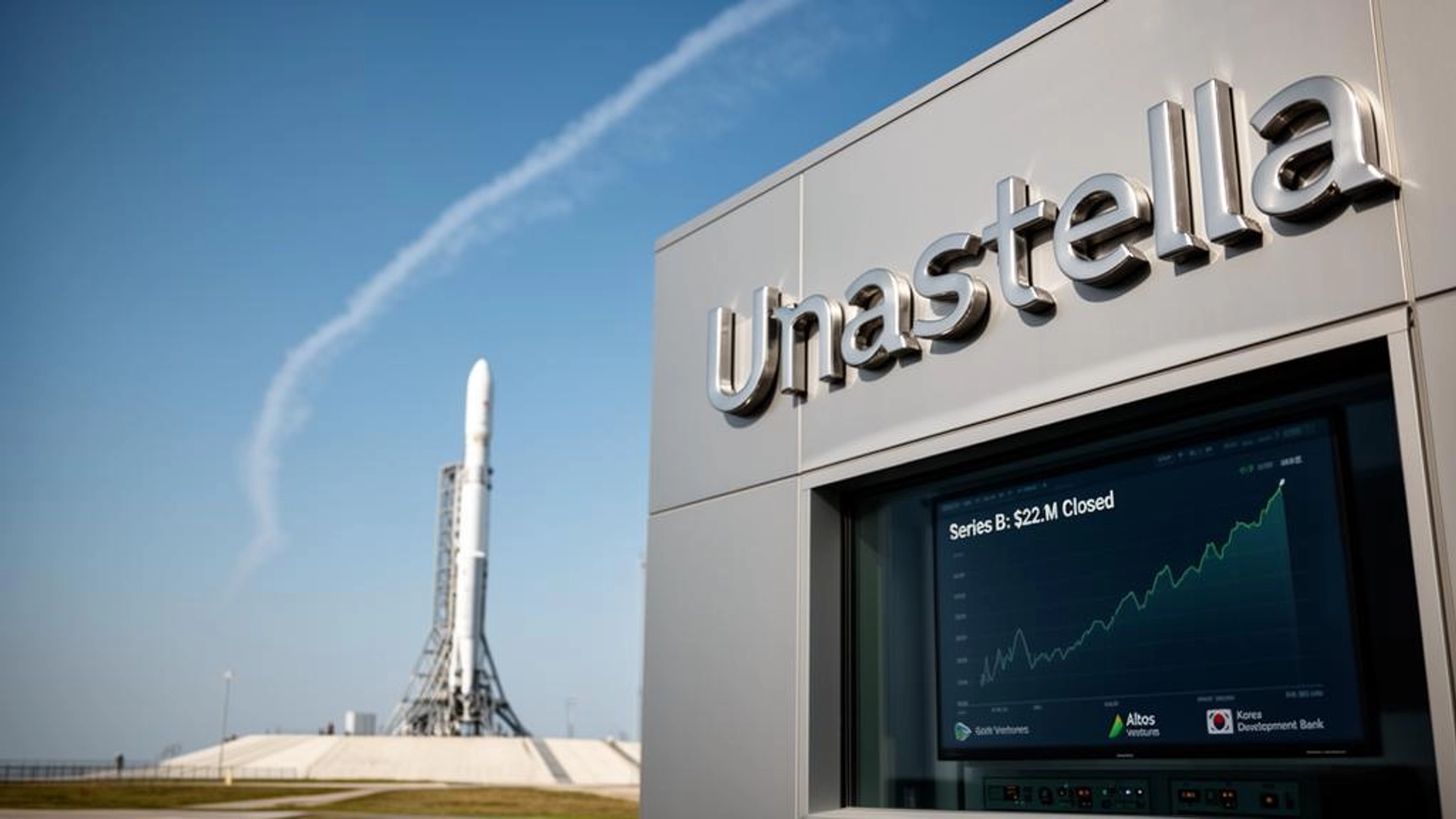
In a significant move that underscores this trend, Unastella, a four-year-old South Korean rocket startup, has successfully closed a $24 million Series B funding round, bringing its total funding to an impressive $44 million. This substantial investment signals strong investor confidence in the company's ambitious plan to develop its own launch vehicles and engines, with an immediate focus on small satellite launch services.
Tactical Execution: From Local Soil to Flight Validation
The Seoul-based company marked a critical milestone in May 2025 by launching its own rocket, the UNA EXPRESS-I, from South Korean soil. This successful launch served as the first real-world, end-to-end test of Unastella's integrated system, from design and manufacturing to ground operations and flight data collection, all handled in-house.
Unastella's technological approach is both proven and innovative. The company employs a kerosene and liquid oxygen propulsion system, a highly reliable combination that has been a workhorse in rocket history, notably used by SpaceX's Falcon series. However, Unastella distinguishes itself by swapping out the traditional turbo pump—a complex component that pressurizes propellants—for an electric motor pump. This simpler and cheaper alternative, already validated in flight by New Zealand-founded, Nasdaq-listed Rocket Lab, streamlines the engine design.
Strategic Architectural Trade-Offs
Mass vs. Complexity: While electric motor pumps are heavier, meaning less payload capacity for satellites, Unastella's founder and CEO, Jae Park, frames this as a deliberate strategic choice.
Pragmatic Commercialization: Park states the company's focus is not on building the "most impressive rocket" from an R&D perspective, but rather on becoming a commercial launch company that can "get to market fast".
Cost-Effectiveness Over Mass Optimization: This pragmatic approach prioritizes speed and cost-effectiveness over maximizing every kilogram of payload, a calculated decision in a rapidly evolving market where timely access to space is becoming paramount.
Macro Environment: The Commercial Space Economy Expansion
The influx of capital into companies like Unastella reflects a broader understanding of the immense growth potential within the commercial space launch market. This sector, which was valued at approximately $15 billion in 2023, is projected to nearly triple to $41 billion by 2030, according to Grand View Research. This explosive growth is driven by the increasing deployment of satellite constellations for everything from internet connectivity and GPS to climate monitoring and defense, all of which require reliable and frequent access to orbit.
Aerospace Organization | Country of Origin | Core Launch & Propulsion Strategy |
SpaceX | United States | Reusable Falcon rockets and Starship development; pioneering ultra-low-cost heavy lift capacity. |
Rocket Lab | New Zealand / US | Electron rocket utilizing electric motor pump systems; proven dedicated small-sat launch leader. |
Unastella | South Korea | Electric motor pump kerosene-LOX systems; focused on high-velocity commercial market entry. |
Galactic Energy / LandSpace | China | Rapid deployment of private solid and liquid-propellant small-to-medium orbital launch vehicles. |
The competitive landscape extends far beyond the traditional space powers. In Asia, China has several private companies like Galactic Energy, LandSpace, and iSpace already conducting multiple launches. Japan's H3 rocket, a collaboration between JAXA and Mitsubishi, successfully completed its first launch in 2024, while its startup Interstellar Technologies is also developing a small launch vehicle. Australia's Gilmour Space also made an orbital launch attempt this year.
What Happens Next for Unastella and the Asian Space Scene
Unastella, currently not generating revenue, is clearly betting on its technical roadmap and market strategy to attract continued investment. Investors like Altos Ventures, Korea Development Bank, Strong Ventures, and Hana Ventures leading its Series B round underscore this confidence.
The immediate next major target for Unastella is the launch of UNA EXPRESS-II, scheduled for next year. Reaching an altitude of 100 kilometers with this launch would be a significant milestone, a threshold that Park believes will unlock crucial partnerships with South Korea's major aerospace and defense firms.
The South Korean Ecosystem Foundation
Public-Private Technology Transfer: The 22-person startup has already laid critical groundwork, developing institutional relationships within South Korea's nascent space industry. The country's national space agency has flown components on UNA EXPRESS-I, and the Korea Aerospace Research Institute (KARI) has transferred electric motor pump technology to Unastella.
Government Infrastructure Commitments: South Korea's space agency, KASA, established in 2024, has committed $266 million over seven years to build out launch infrastructure, a clear signal of the government's intention to empower private space companies.
Conglomerate Consolidation: Hanwha Aerospace, the country's largest defense conglomerate, has taken over the government-built Nuri rocket after acquiring full technology rights from KARI.
Domestic Startup Competition: Other startups like Innospace, which has already gone public on the Korean stock exchange and conducted a sub-orbital launch, and Perigee Aerospace, developing its Blue Whale rocket, are also vying for market share.
While none of these Korean entities have yet achieved a commercial orbital launch, their collective efforts signify a concerted national push into the private space economy. Looking ahead, Unastella's progress, alongside other Asian ventures, contributes to a global competitive landscape that impacts consumers and businesses worldwide. Cheaper and more frequent launch options could translate to more robust satellite internet, improved weather forecasting, and a broader array of data-driven services on Earth.