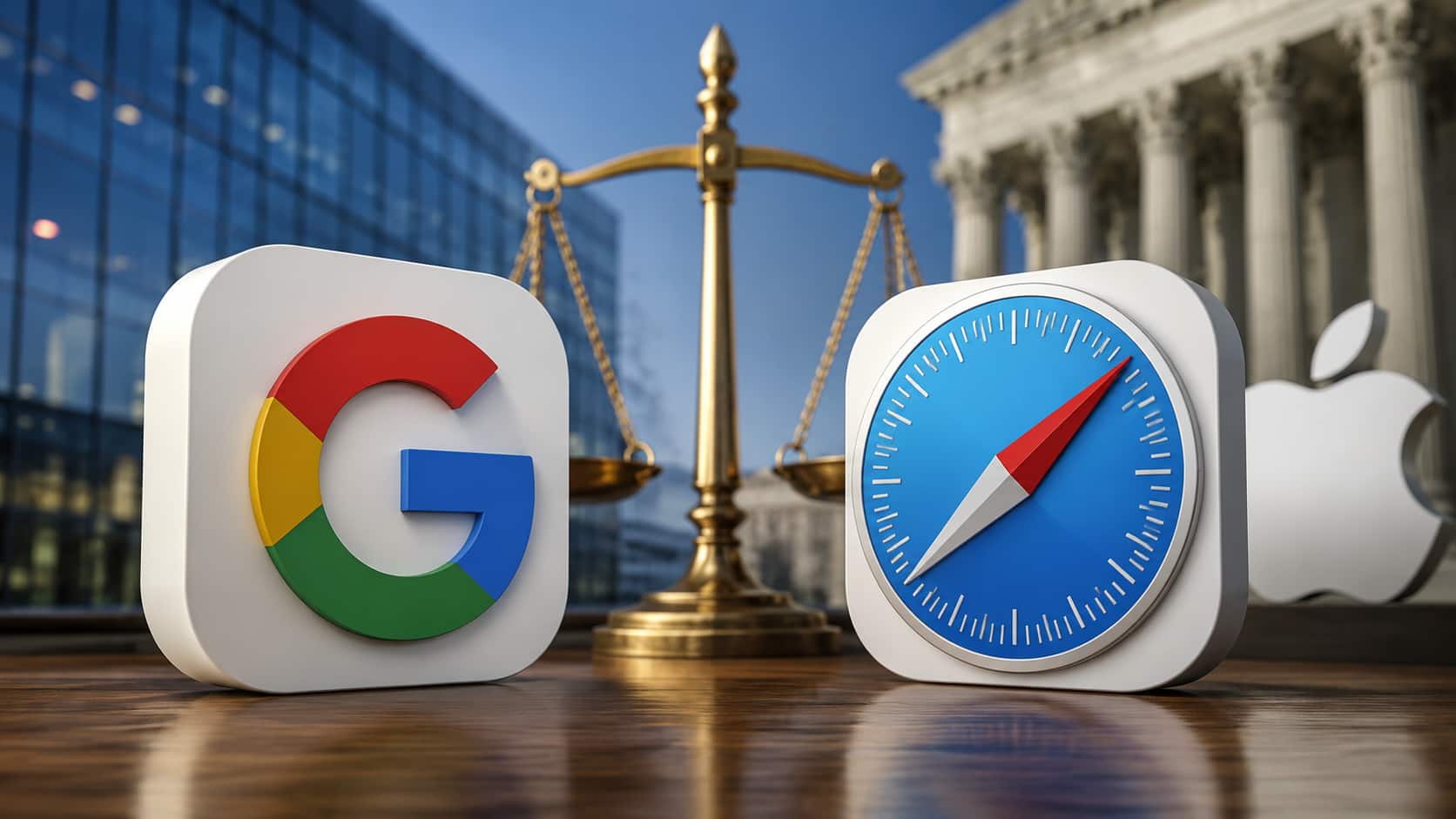
Google argues its Apple Safari search agreement is fair market competition, not an illegal monopoly, in a pivotal antitrust appeal.
Google has initiated an appeal against an antitrust ruling that found its search business maintained illegal monopolies, contending that its lucrative agreement with Apple for default Safari placement represents legitimate market competition rather than anticompetitive exclusion. The move could significantly reshape the landscape for digital advertising revenue and the future of search engine dominance, with implications for investor confidence in major tech platforms facing increasing regulatory scrutiny globally.
The appeal, filed today with the U.S. Court of Appeals for the District of Columbia Circuit, seeks to overturn the entirety of an August 2024 district court decision which concluded Google violated Section 2 of the Sherman Act. This original ruling by Judge Amit Mehta explicitly stated Google acted as a monopolist to preserve its market power. The subsequent remedies phase allowed Google to continue paying Apple for default placement in Safari but imposed strict new conditions, including a prohibition on exclusivity and a 12-month default limit, forcing annual competitive bids from rival search providers.
Central to Google's defense is its assertion that Apple's selection of Google as the default search engine in Safari, covering iPhone, iPad, and Mac devices, was a merit-based decision driven by superior product quality and monetization capabilities. Court documents revealed Google paid Apple approximately $20 billion in 2022 alone for this arrangement, a figure underscoring the substantial financial stakes involved for both companies. Google argues the district court committed several legal errors, including narrowly defining relevant search markets and mischaracterizing its browser agreements as exclusionary.
What It Means
A successful appeal by Google would provide a powerful precedent against future antitrust challenges targeting similar commercial agreements in the digital sector, potentially solidifying the existing power dynamics in the search and mobile ecosystems. Conversely, upholding the district court’s ruling would empower regulators and rival firms, fostering a more competitive environment for default placements and potentially redistributing billions in advertising revenue across the industry. The outcome will influence investment strategies in both established tech giants and emerging search technologies, particularly those leveraging generative AI.
The appellate court's decision will be closely watched by investors keenly assessing regulatory risk for Big Tech, as it could dictate the long-term profitability models reliant on default placements and exclusive partnerships. A ruling favoring Google would reinforce the argument that such deals are products of intense competition, potentially dampening further governmental efforts to break up or heavily regulate dominant platforms. Conversely, an affirmation of the lower court’s findings would signal increased judicial willingness to intervene in digital markets, potentially prompting recalibrations of revenue projections for companies like Apple and Google.
Google paid Apple approximately $20 billion in 2022 for default search engine placement in Safari, highlighting the immense financial value of such market arrangements.
The Context
The antitrust battle began when the Department of Justice filed its case against Google, culminating in Judge Mehta’s finding that Google unlawfully maintained monopolies in general search and search advertising. During the remedies phase, the court clarified the terms of the Google-Apple agreement: Apple received 36% of search advertising revenue generated through Safari in exchange for making Google its default search provider. The imposed remedies were designed to break Google’s perceived stronghold, notably by preventing exclusivity and mandating an annual review of default agreements, theoretically giving competitors like Microsoft's Bing a yearly opportunity to bid for the lucrative position.
In its appeal, Google specifically references testimony from Apple SVP of Services and Health, Eddy Cue, who described choosing Google as a "no brainer" due to its superior search engine and monetization prowess. Cue’s testimony highlighted Apple’s belief that even an offer from Microsoft to pay 100% of search advertising revenues for Bing’s default placement would result in less profit for Apple, as users would inevitably abandon Bing for Google. Cue reportedly stated there was "no price that Microsoft could ever offer [Apple]" to make Bing the default that would be more profitable, underscoring Apple's focus on user preference and revenue generation rather than exclusivity.
Google further argues that its deal with Apple merely established a default, with rival search engines remaining accessible through Safari’s settings, thereby refuting claims of outright exclusion. The company also asserts that the decision to design Safari around a single default search engine was Apple’s prerogative, independent of its commercial agreement with Google. These arguments collectively aim to dismantle the lower court's finding that Google’s actions were inherently anticompetitive rather than a reflection of vigorous, lawful market competition based on product quality and consumer preference.
The U.S. Court of Appeals for the District of Columbia Circuit will now review Google’s comprehensive appeal, including its claims of legal errors regarding market definition and the remedies imposed, which Google contends unfairly mandate sharing search data and results with rivals. A decision from the appellate court is anticipated to have far-reaching consequences, potentially redefining the parameters of legal competition in digital markets and influencing future regulatory actions against dominant technology companies. The proceedings will be closely monitored for indications of how courts interpret market dynamics and alleged monopolistic practices in the evolving digital economy.
Frequently asked questions
What is Google appealing regarding its Safari deal?
Google is appealing an antitrust ruling that found its search business maintained illegal monopolies, specifically defending its agreement with Apple for default Safari search placement. It argues this deal represents legitimate market competition rather than anticompetitive exclusion.
Why is Google's Safari deal with Apple controversial?
The deal is controversial because critics argue it stifles competition and constitutes an illegal monopoly, while Google maintains it's a legitimate, pro-competitive business agreement that benefits users and both companies.
How could this appeal impact digital advertising?
The appeal could significantly reshape the landscape for digital advertising revenue by altering how search engines compete for default placements and potentially opening up the market to more diverse advertising opportunities.
What is the primary argument Google is making in its appeal?
Google's primary argument is that its agreement with Apple to be the default search engine on Safari is a result of legitimate market competition, not an anticompetitive exclusion or an illegal monopoly.
Which companies are involved in this antitrust case?
The main companies directly involved in the antitrust case are Google and Apple, with the U.S. government bringing the antitrust suit against Google regarding its search practices and deals.
What is the potential future impact on search engine dominance?
The ruling's outcome could significantly impact the future of search engine dominance. It might either solidify Google's market position or create opportunities for competitors by altering the rules for default search engine placements.